Heating oil prices are soaring in Massachusetts. What are your options this winter?

Massachusetts homes heat up in a few different ways. Natural gas is the most common, but heating oil is still a big part of the picture: about 1 in 5 Massachusetts households relies on oil or kerosene as its primary heating fuel. Plenty of homes also have older boilers or furnaces that have been keeping things warm for decades.
If that's your home, you know the drill: keep an eye on the tank, schedule deliveries before the cold really sets in, and hope prices are reasonable when you need a refill. And unlike your thermostat, you don't get much say in what heating oil costs this winter.
So what are your options if you're ready for a change? Let's look at how heating with oil compares with a heat pump, including the costs, incentives, and electricity rates that can make a difference.
Heating oil prices have jumped. Here's what that looks like at home.
It's no secret that heating oil has gotten a lot more expensive this fall. According to the Massachusetts Department of Energy Resources, the average price reached $6.12 per gallon in early October 2026, up about 74% from $3.53 a year earlier.
One of our own Elephant Energy teammates shared his recent heating oil delivery receipts with us. (A heat pump is on his wishlist, too. We're rooting for him.)
| Delivery date | Price per gallon |
| August 2025 | $3.49 |
| September 2026 | $5.999 |
His per-gallon price went from $3.49 to nearly $6 in just over a year. That's about 72% more per gallon.
Of course, heating oil prices don't go up every year, and they can come back down. But they can also jump quickly in response to global events and supply disruptions, leaving homeowners with little control over what their next delivery will cost. Recent reporting from Grist explores how global supply pressures are contributing to this year's spike across the Northeast.
So, what can you do if you'd rather not be quite so exposed to oil prices? One option is a heat pump.
The problem with heating oil: you can't control the price
Let's say your household uses around 800 gallons of heating oil over the winter. A change in price of just 50 cents per gallon means an extra $400 over the season. A $1 increase means $800 more. And a $2 jump? That's an extra $1,600.
| Price increase per gallon | Extra cost over 800 gallons |
| $0.50 | $400 |
| $1.00 | $800 |
| $2.00 | $1,600 |
That's the frustrating part about heating with oil: even if you use the same amount as last winter, your bill can look very different. You can turn down the thermostat or improve your insulation, but you can't control the price of your next delivery.
What could heating with a heat pump cost instead?
Heat pumps work differently from oil boilers and furnaces. Instead of burning fuel to create heat, they move heat from the outdoor air into your home. That makes them highly efficient: a heat pump can deliver multiple units of heat for every unit of electricity it uses.
But efficiency isn't the whole cost equation. Electricity prices matter, too. Here's an illustrative comparison using 800 gallons of heating oil as a starting point.
Assumptions for this example:
- Oil boiler efficiency: 80%
- Heat pump seasonal efficiency: a coefficient of performance (COP) of 2.5
- Heat pump electricity use: approximately 10,400 kWh to deliver a comparable amount of heat
- Example electricity prices: $0.28/kWh and $0.18/kWh
| Heating scenario | Illustrative seasonal energy cost** |
| Oil at $5.74/gallon | $4,592 |
| Heat pump at $0.28/kWh | $2,910 |
| Heat pump at $0.18/kWh | $1,870 |
**These are modeled estimates, not a prediction of what your household will pay. They don't include equipment and installation costs, maintenance, or other household electricity use. The oil price is a historical reference point, not a current quote, and actual heat pump performance depends on the home, equipment, weather, and how the system is installed.
The takeaway? Heat pumps can offer meaningful operating-cost savings, particularly when oil prices are high and electricity rates are lower. But it's worth looking at the electricity rate available to your home before comparing the two.
A new Massachusetts heat pump rate could help lower winter bills
Massachusetts has introduced seasonal heat pump electricity rates through Eversource, National Grid, and Unitil. For eligible residential customers, these rates reduce certain electricity delivery charges during the winter heating season, from November 1 through April 30.
Here's how National Grid's base distribution charge compares:
| National Grid rate | Base distribution charge |
| Standard residential rate | $0.06677/kWh |
| Seasonal heat pump rate (Nov. 1–Apr. 30) | $0.02440/kWh |
| Difference | $0.04237/kWh less |
A quick clarification: These figures are the base distribution charge only, not the full price of electricity. Your supply charge and other bill components still apply. The discount also applies to eligible household electricity use once you're enrolled, not just the electricity used by your heat pump.
At the modeled usage of about 10,400 kWh, that difference would amount to roughly $441 in lower base distribution charges over the season. That's an illustration, not a guaranteed savings amount; actual savings depend on your utility, usage, and rate structure.
State estimates suggest eligible households could save hundreds of dollars over the winter. Eversource customers have also reported savings of around $430 over a winter season, though individual results vary.
If your heat pump was installed through a Mass Save program, or you received a qualifying Mass Save heat pump rebate in 2019 or later, you may have been automatically enrolled. Enrollment processes vary by utility, so it's worth checking your bill or contacting your provider to confirm.
Learn more about the Massachusetts seasonal heat pump rates, or check the details for Eversource, National Grid, or Unitil.
Mass Save rebates can help with the upfront cost
Operating costs are only part of the decision. Installing a heat pump is an investment, and Massachusetts homeowners may qualify for incentives through Mass Save.
Depending on the type of installation and your eligibility, 2026 incentives include:
- Whole-home heat pumps: rebates of up to $2,650 per ton, capped at $8,500.
- Partial-home heat pumps: rebates of up to $1,125 per ton, capped at $8,500.
- Income-eligible households: enhanced incentives of up to $16,000, with no-cost options available to some eligible households.
- 0% HEAT Loan: eligible homeowners may be able to finance up to $25,000 for qualifying improvements.
Eligibility, incentive amounts, and program requirements can change, so check the latest details directly with Mass Save.
Will a heat pump actually work through a Massachusetts winter?
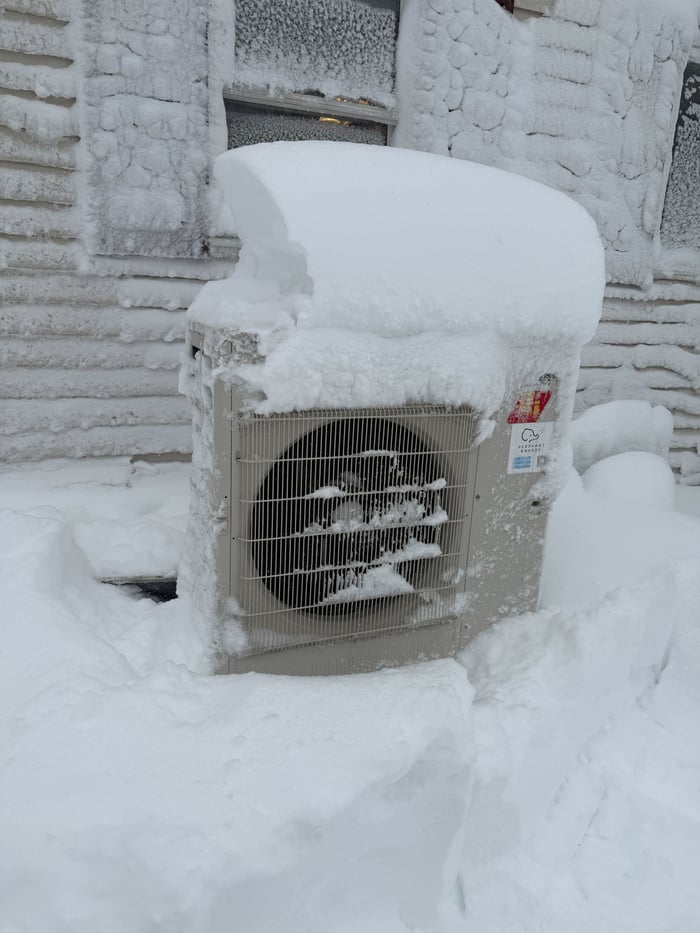
Yes. Modern cold-climate heat pumps are designed to heat homes in cold winter conditions, including the temperatures Massachusetts regularly sees. We’ve installed 2,000+ heat pumps throughout Massachusetts and Colorado, and they’ve all kept our homeowners warm through the cold snaps. Don't just take our word for it! Check out this story from one of our customers in Lynn, MA shared how their heat pump performed during a January cold snap, when temperatures dropped below zero:
With my gas furnace, you’d get home, crank it up, and wait for all the rooms to get warm,” Richard remembers. “But heat pumps work differently. They balance the air in your house so all the rooms get warm at the same time. That way, all the rooms are comfortable, 24/7.
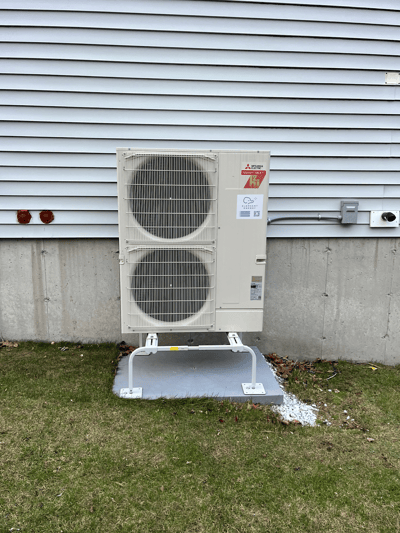
The right system still needs to be sized and installed for your home, though.
Some homeowners choose to keep their existing oil boiler as a backup while using a heat pump for most of their heating. Others choose a whole-home system designed to meet their heating needs without relying on oil. The best setup depends on your home's insulation, existing equipment, comfort preferences, and budget.
And unlike an oil boiler, a heat pump can provide air conditioning in the summer, too. If you're currently relying on window units or a separate AC system, that's another benefit to consider.
The bottom line
You can't predict what heating oil will cost next winter. And while electricity prices aren't fixed or immune to change either, a heat pump gives you another way to heat your home, with high efficiency, potential operating-cost savings, and access to Massachusetts' seasonal heat pump rates and Mass Save incentives.
The best option depends on your home and your energy rates. If you're curious what a heat pump could look like for your house, Elephant Energy can help you explore your options.